

Facing Challenges: PDIP vs MUI on Prabowo’s APBN Slaughter Cows
Facing Challenges has become a central theme in the recent debate between PDIP and MUI regarding the use of APBN funds for the purchase of kurban animals, particularly cattle, by former President Prabowo Subianto. The disagreement highlights differing interpretations of Islamic principles in the context of national budget allocation. While PDIP emphasizes that kurban should be sourced from personal wealth, MUI supports the use of state funds as a legitimate form of religious contribution. This conflict underscores the challenges of aligning religious practices with modern governance structures in Indonesia.
Debate Over Kurban Sourcing and Syariah Compliance
Facing Challenges in defining the boundaries of syariah compliance, Guntur Romli, a PDIP politician, argues that kurban should remain a personal act. In his Instagram video on May 26, 2026, he clarified that state funds, such as APBN, are not equivalent to individual wealth. “Kurban adalah pribadi, bersumber dari dana pribadi. Tidak bisa diatasnamakan lembaga atau negara. Kurban tidak bisa mengambil dana dari APBN,” he stated. This perspective emphasizes the importance of maintaining the essence of Islamic rites, where personal devotion is key.
According to Guntur, the concept of patungan (group contribution) allows up to seven individuals to jointly buy a single cow, with each person bearing the cost. However, he asserts that the actual slaughter must be performed in the name of the individual contributors, not as a collective act. “Kurban sapi untuk tujuh individu orang. Tujuh orang itu boleh patungan membeli satu ekor sapi. Kemudian disembelih di atas nama tujuh orang tadi,” he explained, drawing a distinction between shared financial responsibility and personal religious obligation.
Guntur further highlighted that kambing (goat) is exclusively reserved for individual sacrifice, reinforcing his argument that state involvement in kurban could blur the line between personal and public contributions. This stance has sparked discussions about the role of the government in supporting religious activities and whether such involvement compromises the authenticity of syariah practices.
MUI’s Syariah Perspective on State-Funded Kurban
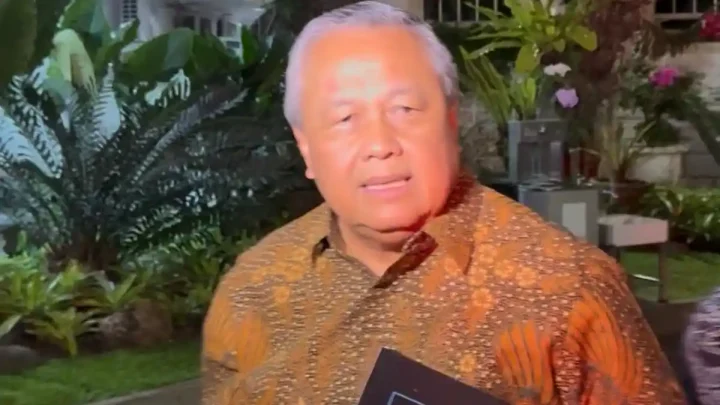
In contrast, MUI’s Fatwa Council head, Prof KH Asrorun Niam Sholeh, stated that using APBN funds for kurban is acceptable under syariah law. He cited a hadith from Imam Bukhari, which suggests that leaders may utilize state resources to perform kurban for the public. “Terkait pembelian sapi dari APBN oleh Presiden melalui Banpres, saya kira ini secara syar’i tidak ada soal,” he noted, emphasizing that the intent behind the act is what matters most.
Asrorun’s explanation addresses the practical challenges of distributing kurban to a large population, especially when resources are limited. He argued that the state’s role in facilitating kurban can be seen as a form of public welfare, ensuring that all citizens have access to the ritual. “Sebagaimana diriwayatkan oleh Imam Bukhari, bahwa disunahkan bagi imam membeli hewan kurban melalui Baitul Mal,” he added, reinforcing the idea that state funding aligns with traditional Islamic practices of communal support.
This debate is not merely about religious interpretation but also about how Facing Challenges in Indonesia’s governance can shape public perception. The use of APBN for kurban is a symbolic act, reflecting the government’s commitment to religious values. However, it also raises questions about the balance between state authority and individual piety. Both PDIP and MUI are navigating these challenges, seeking to reconcile modern administrative needs with religious traditions.
Implications for Religious Practices and Public Policy
The disagreement over kurban sourcing has broader implications for how Facing Challenges in Indonesia’s religious landscape are addressed. It highlights the tension between traditional practices and contemporary administrative frameworks. While PDIP insists that kurban should remain a personal duty, MUI advocates for a more inclusive approach that allows state funds to support collective religious needs. This divergence has led to a public discourse on the role of the government in religious affairs.
Public opinion is split, with some viewing the use of APBN as a progressive move that ensures equitable access to kurban, especially for lower-income groups. Others argue that it dilutes the spiritual significance of the ritual. The debate has become a microcosm of the challenges faced in integrating religious values into national policies, with both sides presenting their arguments through the lens of syariah compliance.
Political and Social Dimensions of the Issue
Politically, the discussion around kurban funding reflects the broader Facing Challenges of balancing ideological commitments with practical governance. Prabowo’s use of APBN for kurban is seen by some as a strategic move to align with the religious values of his supporters, while critics view it as a way to centralize power and influence public sentiment. The issue has become a platform for expressing differing views on how religious practices should be managed in a modern state.
Socially, the debate taps into the cultural importance of kurban. For many Indonesians, the ritual is not just a religious act but also a communal event that strengthens social bonds. The involvement of the state in kurban could be perceived as a way to unify the nation under shared religious practices. However, it also introduces the challenge of ensuring that these acts remain genuine and not overshadowed by political agendas.
As the debate continues, it is clear that Facing Challenges in interpreting syariah will shape future policies. Both PDIP and MUI are working to define the boundaries of what constitutes a valid kurban, and their arguments will influence how the government approaches religious contributions in the years to come. This ongoing dialogue is crucial for maintaining the relevance of Islamic traditions in a rapidly evolving society.